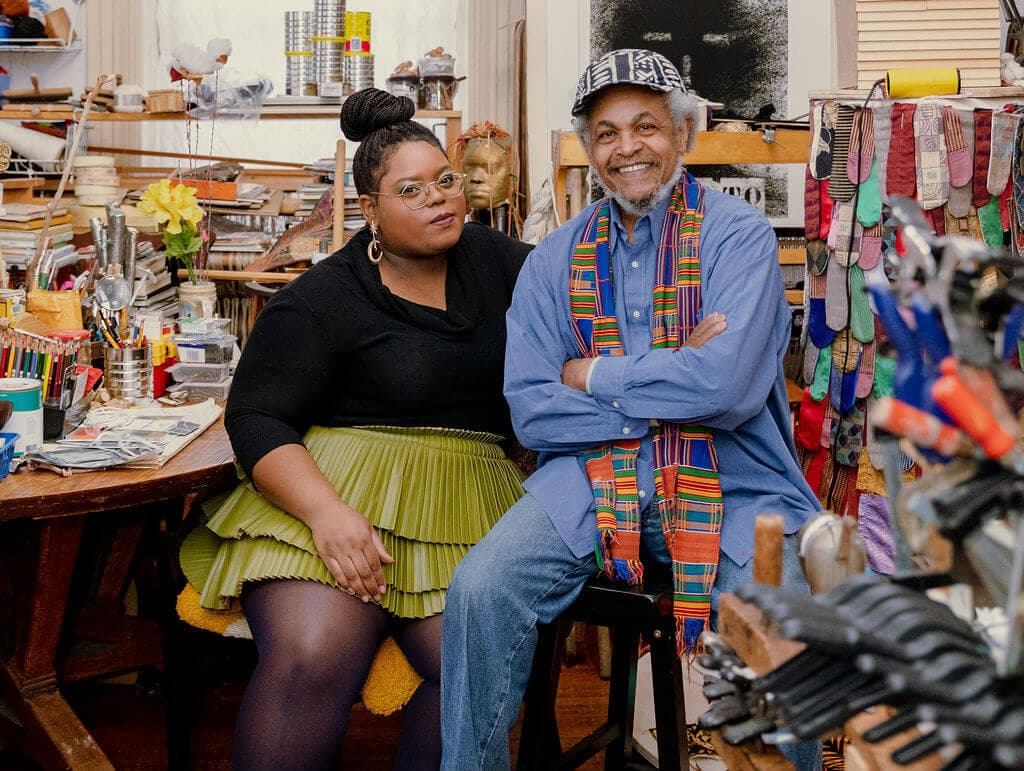
Napoleon Jones-Henderson carried the universe in his pocket. He had the energy of an art school kid and the wisdom of many lives well-lived. He signed his emails, texts, and waves goodbye with “space is the place,” a refrain in homage to Sun Ra’s Afrofuturist call to arms, but when it came from Napoleon, it felt like he was signaling to something the rest of us couldn’t see—something expansive and indefinable.
When Jones-Henderson passed away on December 6, 2025, Boston lost a towering figure and force of creative connection—someone whose presence stitched together generations of artists.
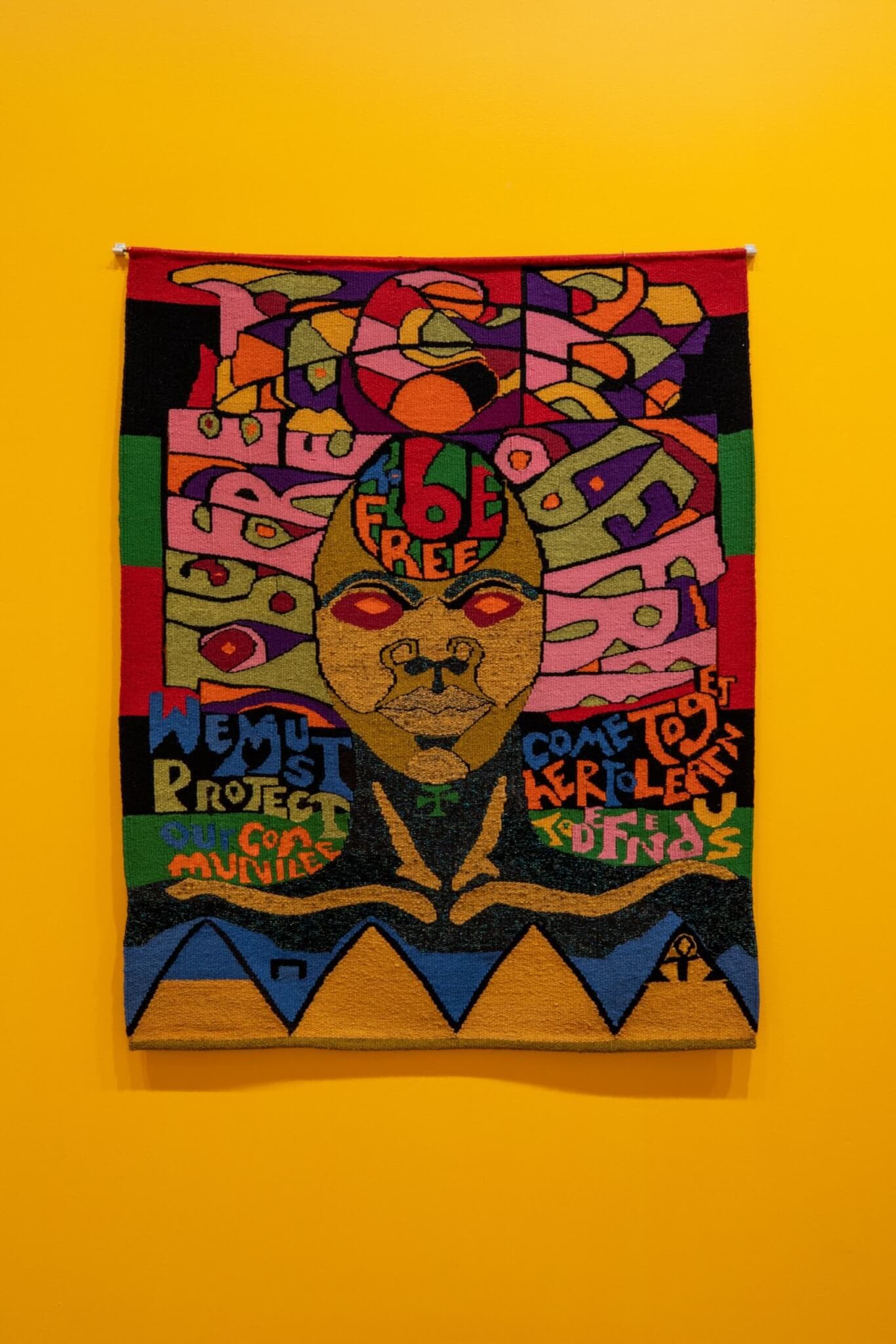
Born in 1943 in Chicago, Jones-Henderson was among the early members of AfriCOBRA (African Commune of Bad Relevant Artists), the influential collective that defined a new Black visual vocabulary in the late 1960s. Its work was unified by a distinct iconography, bold depictions of the African diaspora, and an unwavering belief that art is a tool for liberation. In 1970, just one year after Jones-Henderson joined the collective, his work was included in the exhibition “Ten in Search of a Nation” at the Studio Museum of Harlem where his iconic textiles made their debut in New York City.
Throughout his six-decade career, Jones-Henderson forged a multidisciplinary practice that balanced the urgency of activism with a profound commitment to material exploration, advancing Black aesthetics through the patient, exacting labor of weaving, assembling, and sculpting forms that honor both ancestry and futurity.
Materials excited Jones-Henderson. The first time I visited his Roxbury home (and the hub for his Research Institute of African and African Diaspora Arts), he pulled a large spool of metallic purple thread out from one of the many looms actively in use in his studio. He explained that he purchased the spool in the 1970s from a textile manufacturer in Providence—it was likely manufactured in the 1920s—and has used the thread to give “shine” to dozens of projects ever since.
When Jones-Henderson moved to Boston in 1974 to teach textile arts at MassArt, it was access to materials such as these that excited him. But the AfriCOBRA ethos stuck with him, and what was meant to be a quick stint out east turned into decades of teaching, mentoring, and community advocacy in Boston’s cultural community.
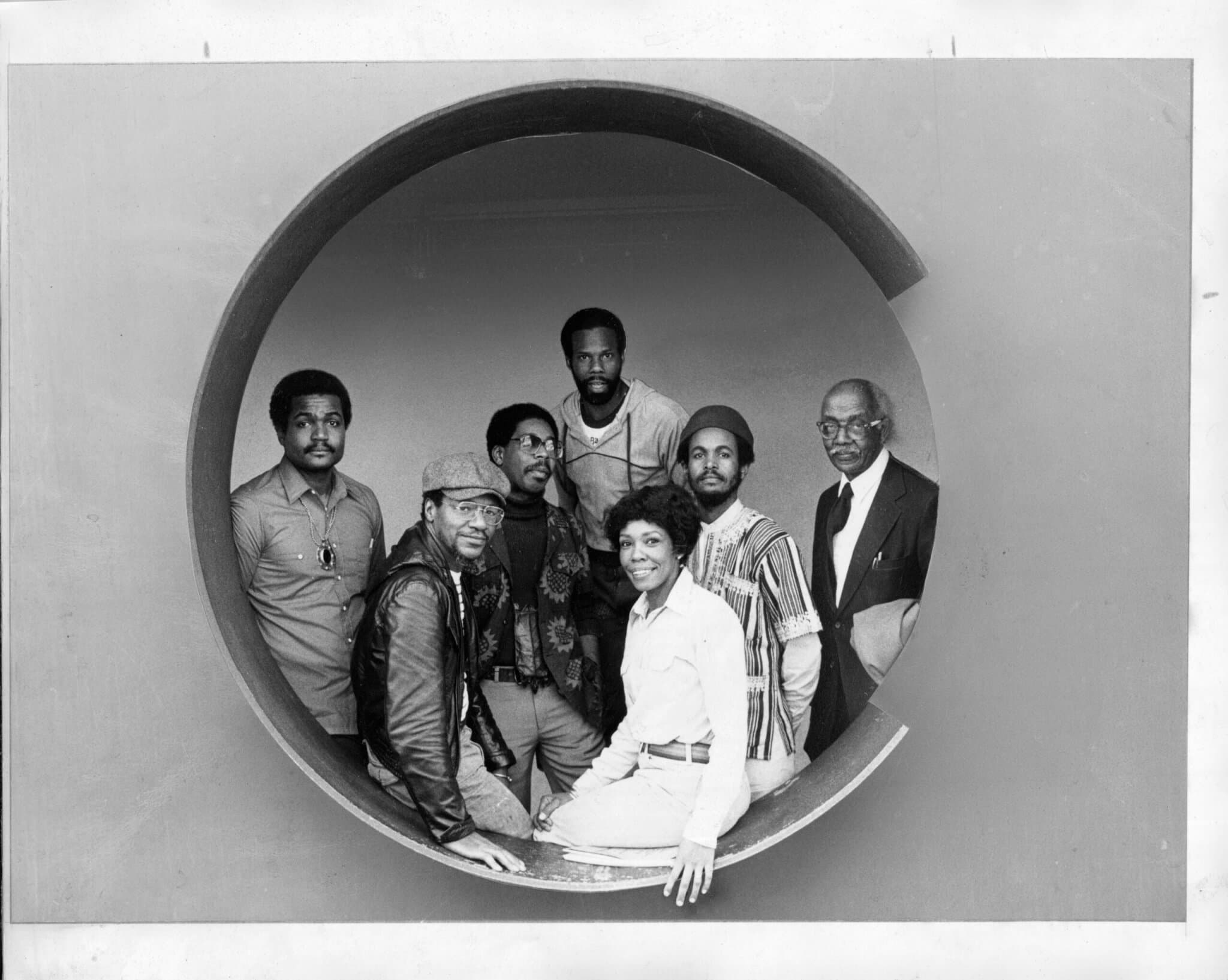
In the 1980s, Jones-Henderson became a part of an emerging network of Black artists that later coalesced into the Boston Collective. Alongside artists Aukram Burton, Lotus Do, Paul Goodnight, Reginald Jackson, Vusumuzi Maduna, Susan Thompson, and Johnetta Tinker, Jones-Henderson helped shape a self-sustaining creative ecosystem that nurtured experimentation, mutual support, and a shared sense of cultural purpose. At the center of this circle was Allan Rohan Crite, whose mentorship profoundly influenced Jones-Henderson.
In a conversation Boston Art Review published between Jones-Henderson and artist Chanel Thervil in 2022, Thervil asked Jones-Henderson what about his art practice makes him most proud. “That I wake up and I get up, and I get busy every day,” he replied. “Also, the blessing and opportunity that my practice has allowed me to be in sharing, collaborative relationships with my peers, colleagues, and most importantly with younger artists. I’ve been able to do that in a formal context by teaching at colleges and universities through workshops with public school systems and so forth. But especially, in the last ten to maybe fifteen years, I’ve been able to work with individuals like you and Flolynda [Jean] and other younger artists. It’s an invaluable opportunity to manifest what my practice is, which is aesthetic uplift and spiritual nourishment,” he said.
“Napoleon embodied something uniquely special about Boston,” wrote Martina Tanga in an email. Tanga organized a series of lectures about the Boston Collective during her tenure as curator at the Museum of Fine Arts, Boston in 2024 and authored an article about the Collective’s 1986 exhibition in China for Boston Art Review. “He believed in investing in community with an infinite well of generosity, which he passed down from mentors like Allan Rohan Crite. This legacy is, I see, manifested every day, and that is confirmation of a life well lived. We could all aspire to this accomplishment.”
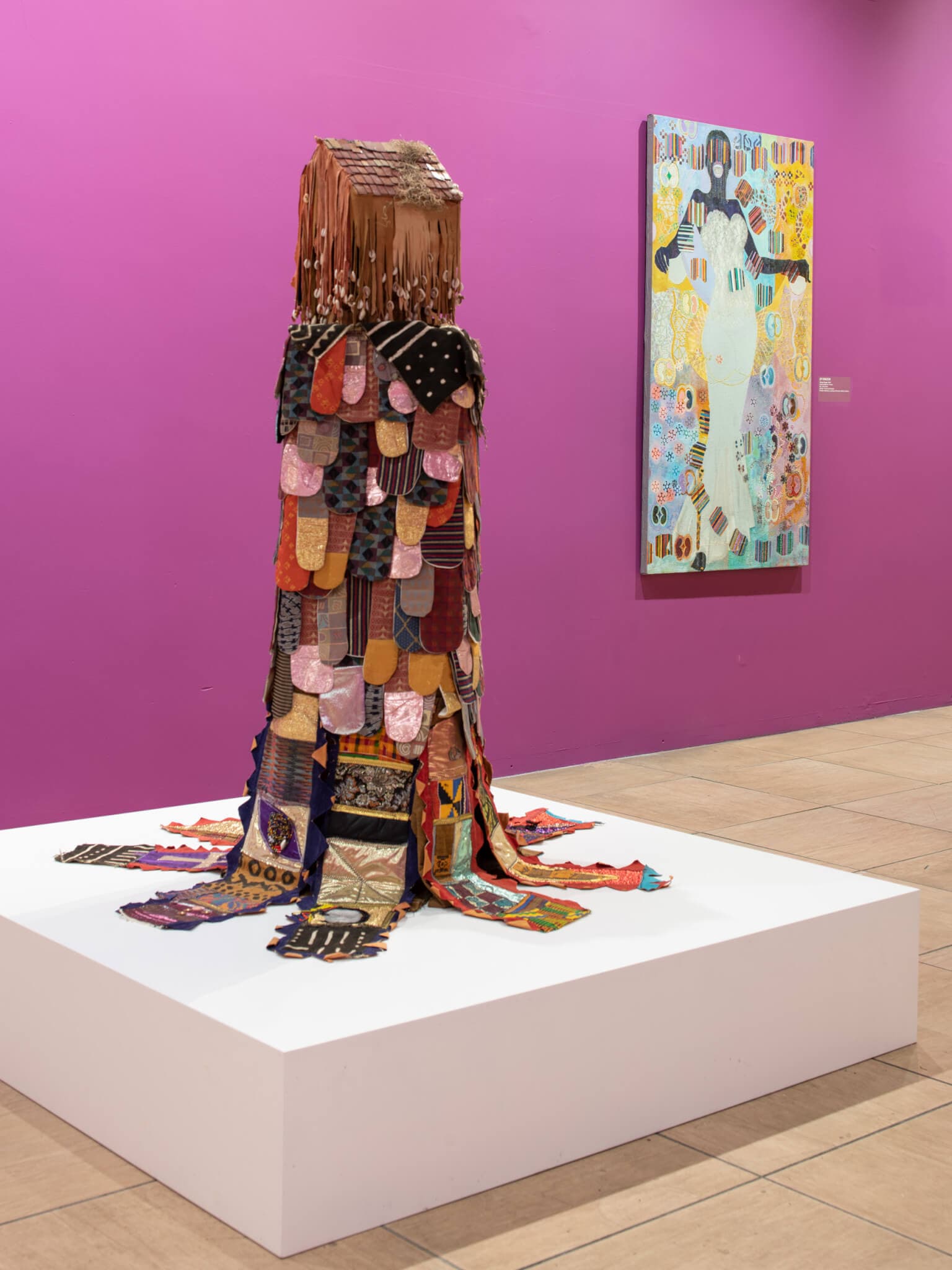
In 2022, the Institute of Contemporary Art / Boston mounted “Napoleon Jones-Henderson: I Am As I Am—A Man,” the most extensive exhibition of his work ever presented in the city. Curated by current Mannion Family Curator Jeffrey De Blois along with the artist, the show featured more than twenty works from across his career, including textiles, enamel-on-copper panels, collaborative wearable pieces made with Barbara Jones-Hogu, and a newly created shrine dedicated to James Baldwin. The exhibition underscored the range of Jones-Henderson’s practice, but was grounded by AfriCOBRA aesthetics and robust engagement with music, literature, and politics.
“Napoleon Jones-Henderson’s mantra was, ‘do the work,’” wrote De Blois in an email. He continued, “He believed that beautiful things grow wherever people invest themselves in the labor of cultivating collective empowerment. This is precisely what he expressed so beautifully through his magisterial artworks, with a remarkable singularity of vision across more than five decades. He was an ever-present force in the community as well, a widely connected artist who gave shape to Boston’s arts ecosystem ever since he moved to the city from Chicago in 1974. His passing is an immense loss, but likewise an indisputable reminder to invest in one another and keep doing the work together.”
In 2022, I mentioned to Napoleon in passing that I would be attending the Venice Biennale for the first time. His work was included in an exhibition of AfriCOBRA artists in 2019—the first major exhibition for the collective in Europe a whole fifty years after their founding. Weeks later, upon switching my phone off of airplane mode at Marco Polo, a text from Napoleon was the first thing to pop up in my notifications. It was a restaurant recommendation and a photo of him from inside the restaurant two years prior. “Enjoy,” he said. I couldn’t believe he remembered I was going to Venice, let alone my departure date. But this was how Napoleon operated. He listened, he remembered details, and he loved being a part of the action, even from afar.
Then, afar was across the Atlantic, now it’s wherever Napoleon rests. Perhaps close or impossibly far away, decorated with the materials he spent his lifetime mastering: the Space that is now his Place.
Martina Tanga shared, “One of the last things he said to me this summer was, ‘I’m still kicking, just not quite as high.’ Dear Napoleon, you’re kicking so high right now. Rest in Power!”
Plans for Jones-Henderson’s celebration of life have not been shared publicly. This article will be updated when we have more information. If you’d like to share a tribute to Jones-Henderson, please email submit@bostonartreview.com